Emotional Anchoring in UGC: How to Trigger Desire, Trust & Action
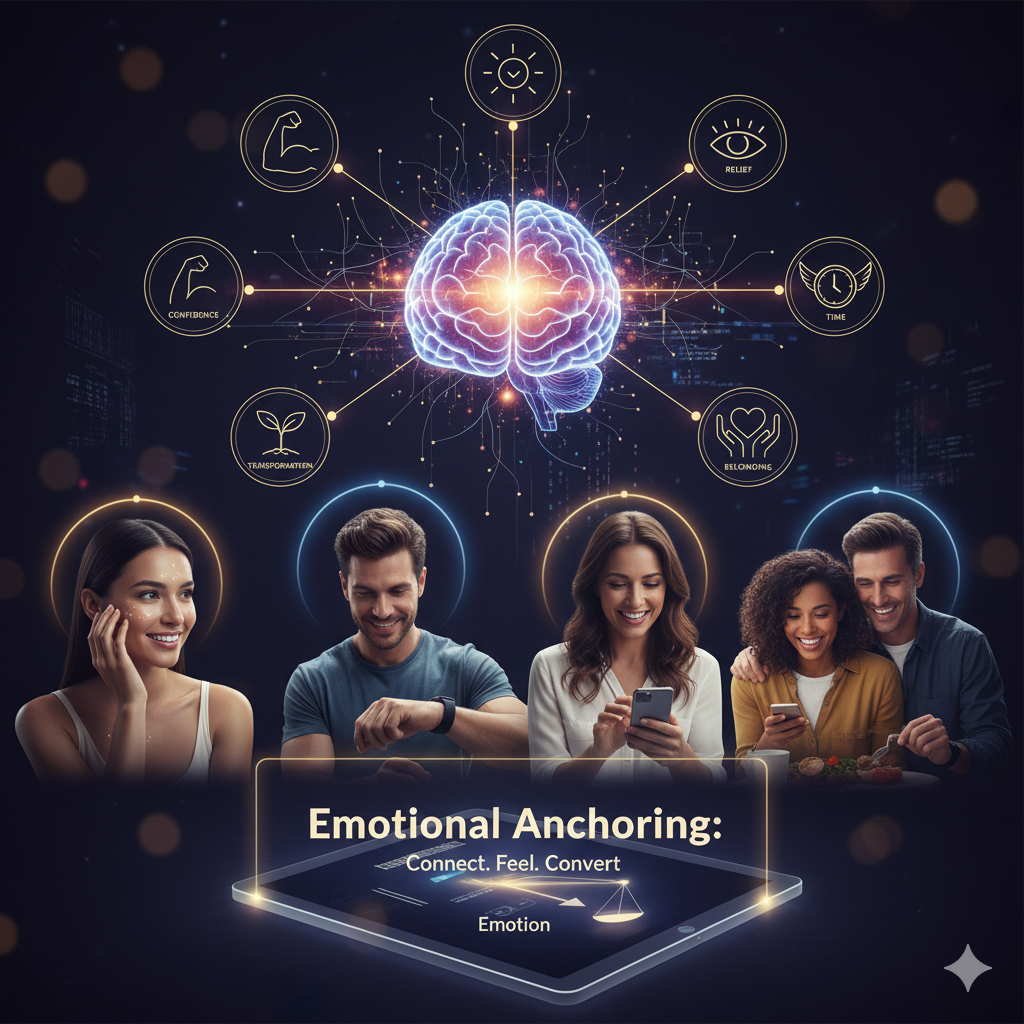
UGC is not about showing the product.
UGC is about making the viewer feel something.
People don’t buy because of:
- features
- ingredients
- discounts
- or brand names
They buy because a video triggers an emotion that aligns with their deeper desire or pain point.
This psychological strategy is called:
⭐ Emotional Anchoring
It is one of the most powerful methods in advanced marketing, yet very few UGC creators or brands use it intentionally.
This blog breaks down:
✔ What emotional anchoring is
✔ Why it works
✔ How to use it in UGC
✔ Real examples
✔ Emotional triggers for different niches
✔ Templates creators can follow
✔ How brands can use it for scaling ads
Let’s dive deep.
⭐ What is Emotional Anchoring?
Emotional anchoring means:
👉 Connecting your product to a specific emotion inside the viewer’s mind.
This emotion can be:
- Relief
- Hope
- Confidence
- Validation
- Pride
- Happiness
- Belonging
- Transformation
- Aspiration
- Comfort
- Convenience
When the viewer FEELS the emotion, the product becomes desirable.
📌 Example:
You don’t sell a moisturizer.
You sell the confidence of clear skin.
You don’t sell a fitness app.
You sell the transformation arc.
You don’t sell a meal service.
You sell freedom from stress.
You don’t sell a planner.
You sell control over your life.
⭐ Why Emotional Anchoring Works (Brain Science)
The brain makes decisions based on emotion → supported later by logic.
Studies show:
- 95% of buying decisions are emotional
- Emotional ads perform 2–3x better
- High emotional resonance increases ROAS dramatically
- Emotional UGC boosts hook rate and watch time
The brain asks 3 subconscious questions:
1. “Is this emotionally relevant to me?”
If yes → they keep watching.
2. “Does this solve my pain or fulfill my desire?”
If yes → interest increases.
3. “Do I trust this person?”
If yes → action happens.
Emotional anchoring activates all three.
⭐ Core Emotional Anchors Used in UGC
🔥 1. Pain–Relief Anchor
Appeals to people who want relief from:
- acne
- hair fall
- stress
- body pain
- time pressure
- financial worry
UGC script example:
“I tried everything for my acne and nothing worked — until this finally calmed my skin in a week.”
Pain → relief → transformation.
🔥 2. Aspiration Anchor
Appeals to:
- beauty goals
- fitness goals
- lifestyle upgrades
- productivity goals
UGC script example:
“I always wanted glowing skin without makeup — this gave me confidence to skip foundation.”
🔥 3. Identity Anchor
People buy products that match their identity:
- “As a busy mom…”
- “As someone with sensitive skin…”
- “As a beginner in fitness…”
Identity anchors create instant relatability.
🔥 4. Transformation Anchor
One of the strongest emotional triggers.
Transformation =
“I was this → now I’m this.”
Used heavily in:
- skincare
- fitness
- wellness
- productivity apps
UGC script example:
“In just 12 days, my morning routine feels 10x easier.”
🔥 5. Security & Trust Anchor
People want safety.
Trust-building lines work extremely well:
- “I was nervous to try…”
- “Honestly, I didn’t expect this to work…”
- “I checked the ingredients first…”
Trust = conversions.
🔥 6. Belonging Anchor
People want to be part of something.
Use:
- “Everyone is talking about this serum…”
- “My whole gym uses this protein…”
- “This has 50,000 reviews…”
It reduces resistance.
🔥 7. Time Anchor
Works for:
- busy students
- working professionals
- parents
UGC script example:
“This saves me 20 minutes every morning.”
Time saved = value added.
⭐ How to Apply Emotional Anchoring in UGC (Advanced Framework)
Use this 5-step formula:
STEP 1: Identify the Primary Emotion
Choose the emotional driver:
- Relief
- Confidence
- Pride
- Hope
- Ease
- Transformation
STEP 2: Build a Relatable Setup
Start with a relatable line:
“If you also struggle with…”
“As a person with sensitive skin…”
STEP 3: Add the Emotional Anchor
Describe the emotional benefit:
“I finally feel confident again.”
“This made my routine stress-free.”
STEP 4: Show Visual or Verbal Proof
Proof can be:
- demo
- before/after
- results
- ingredient explanation
STEP 5: Use a Soft Action Close
No hard selling.
Use a soft CTA:
“Check their website — it might help you too.”
This closes the emotional loop.
⭐ Industry-Wise Emotional Anchors (Highly Advanced)
Beauty & Skincare
Primary emotions:
✔ confidence
✔ relief
✔ transformation
Use before-after narratives.
Fitness & Health
Primary emotions:
✔ discipline
✔ pride
✔ energy
✔ control
Show routine + small wins.
Apps / SaaS
Primary emotions:
✔ ease
✔ control
✔ productivity
✔ convenience
Show demos + outcomes.
Food & Beverages
Primary emotions:
✔ comfort
✔ craving satisfaction
✔ family bonding
Show sensory experience.
Fashion & Lifestyle
Primary emotions:
✔ self-expression
✔ confidence
✔ identity
Show outfits + transformation.
⭐ Examples of Emotionally Anchored UGC Scripts
Example 1 — Pain/Relief
“I was so tired of my skin burning after washing — this finally soothed it.”
Example 2 — Identity
“As someone who wakes up at 6 AM, this product fits perfectly into my routine.”
Example 3 — Transformation
“These are my results after 9 days — I couldn’t believe it.”
Example 4 — Trust
“I checked all the ingredients and they’re super clean.”
Example 5 — Aspiration
“I always wanted glowing skin — this got me closer.”
⭐ Why Emotional Anchoring Is Critical for UGC Ads
Emotion increases:
- Hook rate
- Watch time
- CTR
- Conversion rate
- ROAS
Brands that ignore emotional anchoring struggle with:
❌ low watch time
❌ high CPC
❌ poor retention
❌ weak conversions
❌ low ROAS
Emotion is the #1 predictor of ad success.
⭐ Conclusion
UGC is not a product video.
It is an emotional experience that persuades viewers naturally.
Emotional anchoring turns:
- videos into stories
- stories into trust
- trust into purchases
Master this technique and your UGC becomes unstoppable.
⭐ CTA — Want Emotionally Anchored UGC for Your Brand?
If your brand wants UGC that uses deep emotional psychology, reach out to Creator Navigator — we create storytelling-based UGC built to convert.